



Netra Bikram Bimali / Bhadrapur, Jhapa.


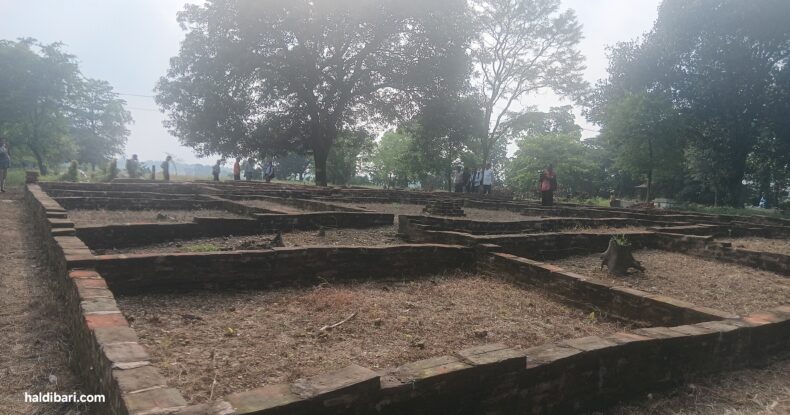
The ninth phase of excavation and research has been completed at Kichakabadha, an ancient site of immense historical and religious significance dating back to the Mahabharata era, located in southern Jhapa. Spanning across 10 bighas of land near the banks of the Deuniya and Mechi rivers in Bhadrapur Municipality-3, the site is rapidly developing as a major tourism and religious-economic hub. A special press conference was organized today at the site itself to share updates on the progress and current status of the excavation.
During the press conference, Mayor of Bhadrapur Municipality Ganesh Pokharel, senior archaeologist Uddhav Acharya, and former chief of Mechi Multiple Campus Chintamani Dahal, among others, discussed the historical importance, challenges, and future master plan for Kichakabadha.
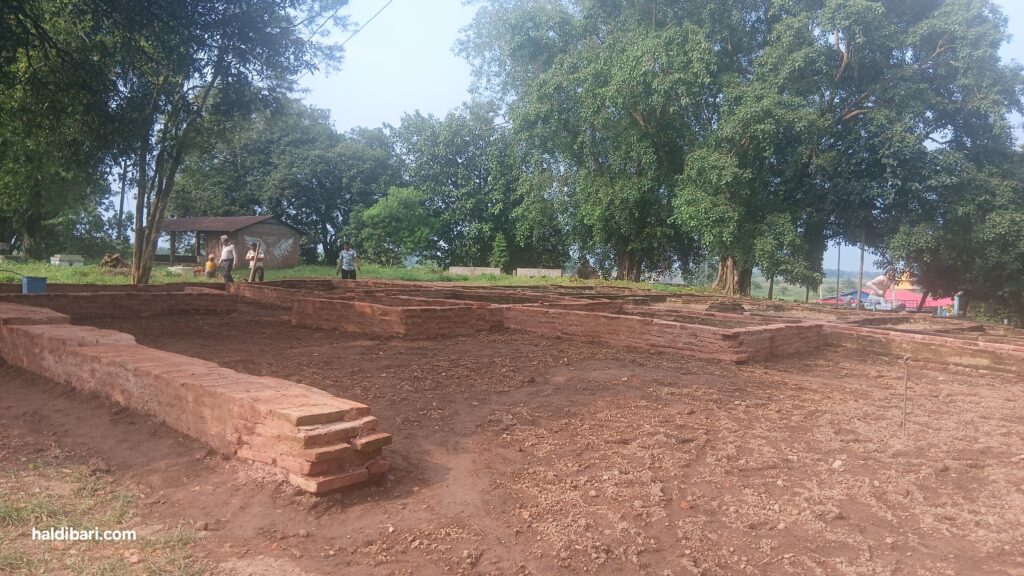
According to Archaeological Officer Nabaraj Adhikari, this year’s ninth phase of excavation was conducted from Jestha 8 to Jestha 30. The excavation was led by senior archaeologist Uddhav Acharya. A 16-member daily team, including Archaeological Officer Nabaraj Adhikari, photographer Ram Shrestha, technical assistants, and laborers, worked continuously on the excavation and research.
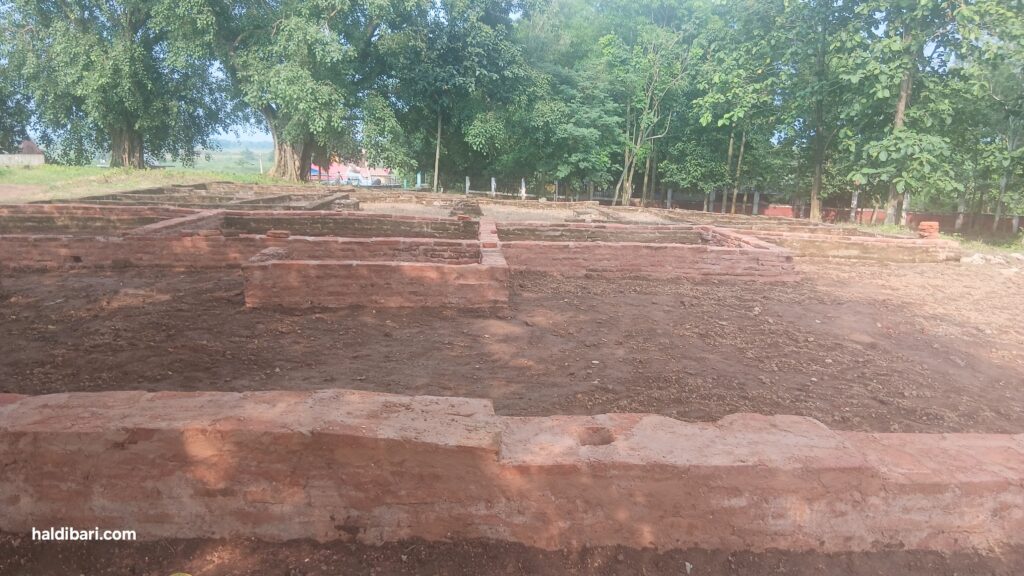
Speaking at the press conference held at the potential-rich tourism and religious site, Bhadrapur Municipality Mayor Ganesh Pokharel expressed deep concern over the federal government’s apathy. He highlighted that cutting down even the already minimal budget has made the excavation and preservation of this historical site extremely difficult and challenging.
Nevertheless, the local government remains committed to its development. Mayor Pokharel informed that special initiatives are underway to secure the necessary budget from the Koshi Provincial Government. He assured that as soon as the funds are received, the remaining excavation work will be completed swiftly. Furthermore, continuous discussions are being held with stakeholders and experts to include Kichakabadha in Nepal’s national list of major historical and tourist heritage sites.
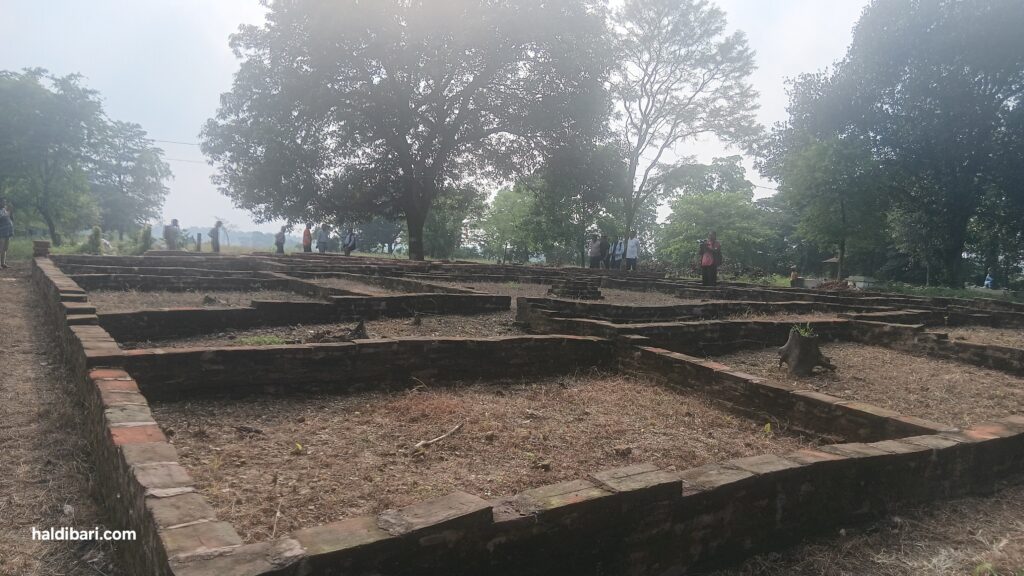
According to senior archaeologist Uddhav Acharya, who has been leading the excavations since 2001 (2058 B.S.), several fascinating new historical facts have emerged during this ninth phase. He revealed that the remnants of an ancient ‘toilet’ were discovered within the palace structure during this round of excavation.
”The archaeological artifacts found so far have already proven the existence of an advanced human civilization and architecture dating back 2200 years,” Acharya said. “However, given the vastness of this site, a definitive and comprehensive description of its entire history can only be provided once the excavation is fully completed.”
Previous excavations at the site revealed a total of five building structures: a large multi-story building in the northeast, another building just south of it, a sentry post room in the northwest, and a residential structure for the security chief alongside other security personnel to the south.
In recent phases, after removing human-made temples from the area, the team uncovered an ancient ‘palace foundation’ over three meters deep, along with ancient bricks. Previous discoveries of spears, arrows, clay utensils, and equestrian gear underwent scientific carbon dating in the United Kingdom, confirming that the civilization dates back to the 1st Century B.C. (2200 years old). Acharya noted that this aligns with the Shunga-Kushana and Gupta periods in India, and studies by French geologists suggest the site was likely destroyed by a natural disaster.
Due to insufficient government funding for the excavation and preservation of this archaeological heritage, the work remains incomplete every year. Representatives of the Department of Archaeology stated that this year, the department allocated a meager budget of only 1 million rupees (10 Lakhs) for the conservation work.
It was emphasized during the press conference that excavating with such small annual budgets could take decades, increasing the risk of destroying precious archaeological artifacts. If the government or relevant authorities provide a budget of approximately 10 to 15 million rupees (1 to 1.5 Crores), the entire excavation could be wrapped up in a single go by deploying adequate manpower continuously for 3 to 4 months.
The historical ruins at Kichakabadha face a severe risk of destruction due to the haphazard construction of modern temples, ponds, and other physical infrastructure in recent times. The department also suspects that past agricultural plowing in the area has already destroyed many valuable artifacts near the surface.
Archaeologist Acharya stressed that visitors walking over the excavated and protected areas cause the ancient structures to crumble. He urged for a ban on public foot traffic within the core ruins and called upon the local conservation committee to play an active role in securing the site.
According to mythology, Kichakabadha was the palace of ‘Kichaka’, the brother-in-law of King Virata during the Mahabharata era. It is believed that during the exile of the five Pandavas, Bhima chased Kichaka all the way from Biratnagar and killed him at this very palace for casting an evil eye on Draupadi—giving the place its name ‘Kichakabadha’ (the slaying of Kichaka). Although no written documents have been found yet, the architectural designs and structures discovered offer undeniable proof that this site was once a historical fort and palac